
For Clinicians · Professional Training
The Integrated Path
to Healing Trauma
The most comprehensive trauma course ever created for clinicians.
$997 · lifetime access · 10 CE credits
Payment plans available.
Trauma treatment is often taught in fragments.
A training on attachment.
Another on the body.
Another on cognition or the nervous system.
Each one is valuable on its own. Few explain how the pieces connect, when to use them, or how to move safely from one phase of treatment to the next.
That gap is where treatment stalls, even for skilled, committed clinicians.
What they need is a clear map of the whole healing process, something the field has never fully provided.
The Integrated Path to Healing Trauma provides that map.
Developed by Dr. Frank Anderson — Harvard-trained psychiatrist, internationally recognized trauma expert, and longtime collaborator of The Body Keeps the Score — this training brings together psychotherapy, neuroscience, attachment science, somatic healing, experiential modalities, and treatment sequencing into one comprehensive clinical framework.
This is not simply another trauma training.
It is the most comprehensive trauma course ever created for clinicians because it finally maps the full healing arc:
The Full Healing Arc
- Symptoms & Survival StrategiesMeet clients where they are: assess, stabilize, map survival.
- Experiential HealingShift from talking about it to experiencing it internally.
- RepairCorrective experiences that repair attachment and needs.
- ReleaseSomatic and emotional nervous-system completion.
- IntegrationLive from healing: identity, boundaries, and purpose.
- Living Beyond TraumaService, meaning, and ongoing care beyond survival.
This is not about going infinitely deep into one modality.
It is about something arguably more important: understanding how the entire trauma-healing process fits together.
Nothing here was invented. The integration is the innovation. The Integrated Path is a paradigm shift and the future of trauma treatment.
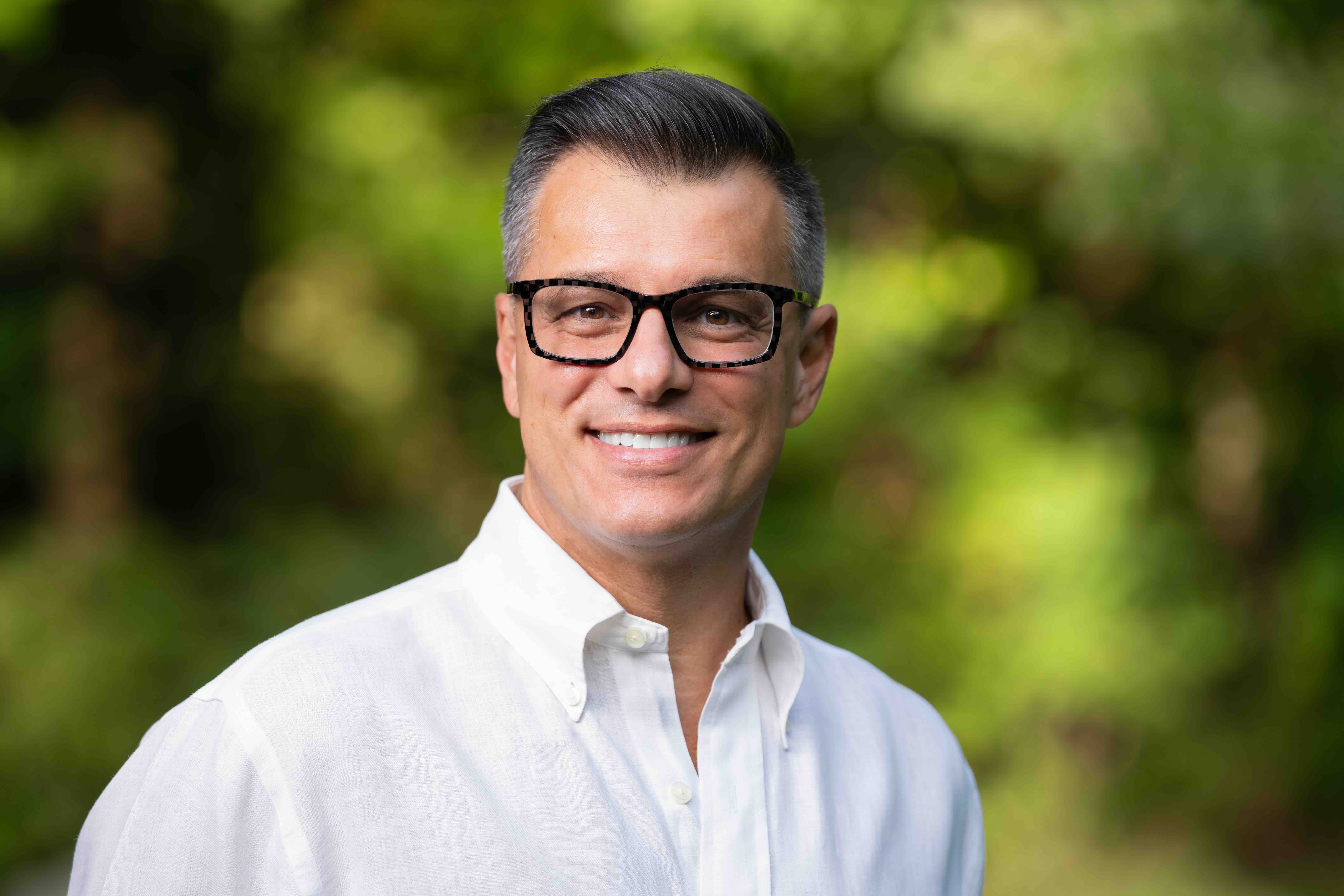
About the Creator · Presenter
Frank Anderson, MD
Frank Anderson, MD, is a Harvard-trained psychiatrist, internationally recognized trauma expert, and one of the leading voices in integrative trauma treatment. A longtime collaborator on The Body Keeps The Score, Frank brings more than 30 years of clinical experience to this training, distilling everything he's learned about how trauma actually heals into one comprehensive clinical framework.
Training
Harvard-Trained Psychiatrist
Recognition
Internationally Recognized Expert
Experience
30+ Years Clinical Experience
What This Training Is (and Is Not)
Trauma treatment is nuanced, relational, nonlinear, and deeply individual. This course respects that reality.
This Training Is
- The most comprehensive trauma-healing framework ever assembled for clinicians
- The first step toward being a certified Integrated Path Clinician
- A structured, phase-based roadmap for how trauma healing unfolds
- A framework for sequencing interventions safely and effectively
- An integration of neuroscience, psychotherapy, attachment, somatic, and experiential approaches
- A map for understanding where clients get stuck — and why
- A clinical framework clinicians can apply immediately in practice
- A foundational system for organizing trauma treatment across modalities
This Training Is Not
- A replacement for clinical judgment
- A rigid protocol
- A single therapeutic modality
- A “quick fix” approach to trauma
- A promise of permanent healing
- A certification focused on only one intervention style
The 10 Core Modules
Each module builds on the last. The Integrated Path to Healing Trauma is structured around the full healing arc — helping clinicians understand not only what trauma healing looks like, but when different interventions become appropriate, and why sequencing matters.
Phase 1 · Awareness, Stabilization & Internal Shift
-
01
Awareness, Assessment & Safety
Why trauma treatment often feels fragmented despite years of training. How to: meet clients exactly where they are, assess symptoms without prematurely labeling trauma, evaluate readiness and capacity, map survival strategies, establish safety and structure, and determine whether trauma-oriented psychotherapy is appropriate at that stage. Includes: the three common entry points into treatment, PTSD and dissociation education, internal vs external assessment, and the foundations of trauma-informed formulation.
-
02
Set Up a Plan (Choose a Path)
How to translate assessment into collaborative treatment planning. Includes: nervous system education, polyvagal theory, hyperarousal and hypoarousal, helping clients understand symptoms as adaptive survival responses, introducing multiple treatment models without rigidity, and orienting clients toward a relationship with symptoms instead of opposition to them. Focuses heavily on: empowerment, pacing, collaboration, and avoiding premature intervention.
-
03
Treatment Begins: Pause & Shift Internally
The transition from: talking about experience → experiencing internally. How clinicians help clients: pause automatic survival responses, track sensations and emotions, develop somatic awareness, differentiate thoughts from identity, distinguish past from present, and shift from narrative processing into embodied awareness. Includes: somatic tracking, vagal awareness, mindfulness-based differentiation, and experiential trauma work grounded in regulation rather than overwhelm.
Phase 2 · Appreciation, Wisdom & Repair
-
04
Appreciation, Distinction, Strength & Wisdom
Why behaviors begin to soften when they feel seen, heard, known, and appreciated. How clinicians help clients: appreciate the intention behind survival strategies, reduce shame and self-loathing, build internal safety, differentiate self from adaptation, and access emerging strength, wisdom, intuition, and internal clarity. Includes: the distinction between behavior and wound, timing differences in severe vs less severe trauma, relational repair, self-compassion, embodiment, vagal safety, and the emergence of the “Human Self.”
Phase 3 · Healing, Release & Moving On
-
05
Visit & Listen to the Wound
How to safely access traumatic wounds without retraumatization. Includes: revisiting vs reliving, emotional expression, somatic embodiment, attachment and preverbal trauma, cognitive, emotional, and sensory communication, helping clients remain present while approaching pain, and facilitating expression without collapse. Focuses on: listening to what the wound is holding, rather than simply retelling the story.
-
06
The Corrective Experience
What actually repairs trauma. How clinicians facilitate: internal repair, relational repair, safety, attunement, compassion, truth, and unmet developmental needs being experienced differently in the present. Includes: memory reconsolidation, attachment repair, co-regulation, responsibility clarification, and the nervous system learning a new outcome.
-
07
Release & Transformation
What release actually is: somatic, emotional, cognitive, and nervous-system completion. How clinicians recognize and support: discharge, nervous-system settling, emotional completion, belief transformation, somatic release, symbolic and imaginal release, and the completion of unfinished survival responses. Includes: release sequencing, ritual, breathwork, movement, nature, and integration-oriented approaches.
-
08
Moving Forward (Integration)
Helping clients move from: living from trauma → living from healing. Includes: identity consolidation, strengthening boundaries, reconnecting to purpose and meaning, integrating healthy behaviors, addressing family legacy and systemic trauma, embodiment of wisdom and intuition, and helping clients build lives no longer organized around threat.
-
09
Service, Purpose & Forgiveness
How healing naturally expands outward. Includes: contribution, service from wholeness rather than survival, spirituality and meaning, self-forgiveness, forgiveness as an optional process, gratitude, compassion, and integrating healing into how clients live and relate to others.
-
10
Ongoing Care
Why trauma healing is not permanently “finished.” How clinicians help clients: recognize reactivation, process new layers of trauma as they emerge, recover faster, and determine whether continued healing work or pauses in treatment are appropriate.
Clinical Demonstrations · The Framework in Real Practice
-
11
Full Patient Session #1
Observe the Integrated Path unfolding in real-time clinical practice. Includes: assessment, pacing, regulation, experiential processing, somatic awareness, differentiation work, and relational attunement. Clinicians see how the framework moves from theory into lived application.
-
12
Full Patient Session #2
A second full clinical demonstration showing how trauma healing unfolds across different presentations, nervous-system responses, and therapeutic pacing. Includes: corrective experience, emotional processing, nervous-system regulation, embodiment, wound work, repair, and integration in real clinical practice. This final module helps clinicians see how the entire framework operates dynamically — not mechanically — across the healing arc.
How the Course Is Structured
This is not a training clinicians passively consume and forget. The Integrated Path to Healing Trauma is intentionally designed as a blend of:
Clinical teaching
Neuroscience education
Applied trauma frameworks
Experiential understanding
Somatic awareness
Real-world treatment sequencing
Patient demonstrations
Reflection and integration
Because trauma healing is not just about learning techniques. It is about understanding: timing, pacing, safety, nervous-system organization, and how healing unfolds across the full arc of treatment.
Why This Course Is Uniquely Comprehensive
This is the only trauma course that:
Maps the complete trauma-healing arc from start to finish
Explains sequencing — what comes first, what comes later, and why
Integrates major evidence-based trauma approaches into one coherent framework
Bridges neuroscience, psychotherapy, attachment, and somatic work
Addresses complex, developmental, attachment, preverbal, and systemic trauma
Teaches clinicians how to think about trauma treatment — not just what techniques to use
Organizes decades of trauma science into one comprehensive model
Is taught by someone who helped shape the trauma field itself
Most trauma trainings teach pieces.
This course teaches the full map.
Built for Your Practice and Your Career
Two additional opportunities for licensed professionals who complete the program.
Earn 10 CE Credits
This program offers 10 continuing education credits. Accreditation for the Integrated Path to Healing Trauma Clinical Program is available as a $40 add-on for licensed professionals seeking CE credit.
View CE DetailsJoin the Clinician Network
Clinicians who complete the program may have the opportunity to be recommended into Dr. Frank Anderson's broader referral network for members of the public seeking trauma-informed clinicians.
Who This Course Is For
Most trauma trainings teach pieces.
This course teaches the full map.
About the Cost
Here’s the reality:
Many trauma trainings cost several thousand dollars
Clinicians often spend years piecing together fragmented frameworks
Most trainings teach one modality, not the entire healing arc
This course costs $997.
Lifetime Access
The Integrated Path to Healing Trauma · Clinician Edition
$997
One-time payment · Lifetime access
- 10 comprehensive modules
- 2 full patient sessions
- 4 live group calls with Frank
- Lifetime access
- Certificate of Completion for all participants
- The most comprehensive trauma framework ever assembled
- Decades of clinical insight and applied experience
- A roadmap clinicians can use throughout their entire career
- Multi-language captions in English, Spanish, and French
- 10 CE credits available (optional +$40 CE accreditation)
Interested in financial assistance? Apply for a scholarship here.
This is not simply information. It is a complete framework for understanding how trauma healing actually works.
For what’s included — this is an extraordinary value.
Continuing Education Details
This program is offered for continuing education credit for licensed professionals. Full program details and disclosures are provided below.
CE Credits
10 Credits
Instructional Level
Intermediate
Format
On-Demand, Asynchronous
Target Audience
Psychologists, Social Workers & Licensed Clinicians
APA Continuing Education Approval
CBI Center for Education is approved by the American Psychological Association to sponsor continuing education for psychologists. CBI Center for Education maintains responsibility for this program and its content. CBI Center for Education is not responsible to verify that American Psychological Association continuing education credits are approved by an attendee's respective state licensing board.
Learning Objectives
By the end of this program, participants will be able to:
- Identify the core phases of the Integrated Path to Healing Trauma framework and describe how a sequenced, phase-oriented approach supports safe and effective trauma treatment.
- Determine client readiness for trauma-focused treatment by evaluating symptom presentation, trauma history, resilience, risk factors, and capacity for self-reflection.
- Differentiate among acute trauma, chronic PTSD, complex trauma, attachment and developmental trauma, dissociative presentations, and other forms of traumatic stress to inform case conceptualization and treatment planning.
- Explain the neurobiological mechanisms underlying traumatic stress, including the roles of memory, autonomic nervous system regulation, and dissociation in trauma-related symptoms.
- Use collaborative, trauma-informed treatment plans that incorporate psychoeducation, client readiness, and individualized intervention sequencing.
- Apply experiential, somatic, and mindfulness-based strategies to help clients shift from narrative processing to present-moment awareness while maintaining nervous system regulation.
- Analyze adaptive survival strategies within a trauma-informed framework to distinguish protective responses from underlying traumatic wounds.
- Use principles from multiple evidence-informed treatment approaches, including attachment-based therapies, somatic therapies, EMDR, interpersonal neurobiology, and compassion-focused interventions, when selecting trauma treatment strategies.
- Apply interventions that promote appreciation of adaptive survival strategies, strengthen client resilience, and support the development of internal resources prior to trauma processing.
- Apply clinical strategies that safely facilitate exploration of traumatic memories while minimizing the risk of emotional flooding, retraumatization, and dissociation.
- Deduce the role of corrective emotional experiences, relational repair, and memory reconsolidation in promoting trauma recovery and reducing trauma-related distress.
- Determine individualized treatment strategies that support integration, long-term recovery, relapse prevention, and ongoing psychological well-being following trauma treatment.
Fees & Refund Policy
Registration fee: $997 (optional CE accreditation add-on: $40). For our full refund and cancellation policy, see our policies page.
Accessibility & Accommodations
Captions are available in English, Spanish, and French. For questions, concerns, or to request special accommodations, please contact us here.
Conflict of Interest Disclosure
There is no commercial support for this program. Dr. Frank Anderson is the developer and owner of The Integrated Path to Healing Trauma and receives compensation from its sale. He is also the author of works referenced in the course, including Transcending Trauma, and receives royalties from those publications. He has no other relevant financial relationships to disclose.
Frequently Asked Questions
The details clinicians ask about most often before enrolling.
Who is this course for?
The Integrated Path to Healing Trauma is built for licensed clinicians already carrying a caseload: psychologists, social workers, therapists and other mental health professionals. The instructional level is intermediate, so it assumes clinical experience rather than teaching from first principles.
How is the course structured?
Around 10 core modules that follow the full healing arc, from awareness, assessment and safety through to living beyond trauma. Each module builds on the last, so the course teaches not only what trauma healing looks like but when different interventions become appropriate and why sequencing matters. It also includes 2 full patient sessions and captions in English, Spanish and French.
How many hours of content are in the course?
The course has about 10 hours and 14 minutes of video. The 10 core modules run about 7 hours and 23 minutes, and the 2 full patient sessions add 2 hours and 51 minutes. It's self-paced, so you can watch a module in one sitting or break it up.
Module 1, Awareness, Assessment & Safety: 1 hr 27 min
Module 2, Set Up a Plan (Choose a Path): 1 hr 27 min
Module 3, Treatment Begins: Pause & Shift Internally: 33 min
Module 4, Appreciation, Distinction, Strength & Wisdom: 1 hr 20 min
Module 5, Visit & Listen to the Wound: 34 min
Module 6, The Corrective Experience: 28 min
Module 7, Release & Transformation: 29 min
Module 8, Moving Forward (Integration): 43 min
Modules 9 and 10, Service, Purpose & Forgiveness and Ongoing Care: 22 min combined
Full Patient Session #1: 1 hr 10 min
Full Patient Session #2: 1 hr 40 min
What does the course cost, and is there a payment plan?
The course is $997 as a one-time payment. A payment plan is also available at 4 monthly payments of $249.25. Both options include lifetime access to every module.
Are CE credits included?
The program offers 10 CE credits. CE accreditation is an optional $40 add-on for licensed professionals seeking credit. CBI Center for Education is approved by the American Psychological Association to sponsor continuing education for psychologists, and maintains responsibility for the program and its content.
What is the format, and how long do I have access?
The course is on-demand and asynchronous, so you work through it at your own pace rather than to a schedule. Access is lifetime, and you can return to any module as often as you like throughout your career.
When are the live calls scheduled?
The live calls with Frank are held on Zoom on the first Wednesday of each month at 12:00 PM Pacific / 3:00 PM Eastern. Your enrollment includes four calls, and you pick the dates that work best for you. You'll find the registration link inside the course after you enroll.
2026: October 7, November 4, December 2
2027: January 6, February 3, March 3, April 7, May 5, June 2, July 7, August 4, September 1
Do I receive a certificate?
Yes. A Certificate of Completion is issued to all participants. That is separate from the optional CE accreditation, which is what licensed professionals add if they need continuing education credit.
Is financial assistance available?
Yes. Scholarships are available, and you can apply using the link in the pricing section above.