
For Personal Healing · Flagship Course
The Path to
Healing Trauma
The most comprehensive course on trauma ever created. A clear, step-by-step map from symptoms to survival to healing to wholeness.
Trauma healing has long been taught in pieces.
A therapist focuses on one modality. A book explains one piece. A podcast names one insight.
Which is often why people can get stuck. Nothing has ever shown people the full path — from symptoms, to survival strategies, to healing, to living whole again.
The Path to Healing Trauma was created to fill that gap. Developed by Dr. Frank Anderson — a Harvard-trained, internationally recognized trauma expert and longtime collaborator of The Body Keeps The Score — this course brings together psychotherapy, neuroscience, somatic healing, and coaching into one clear, linear map.
This is not a new therapy. It is a translation — organizing what decades of trauma science already show works into a path people can actually follow.
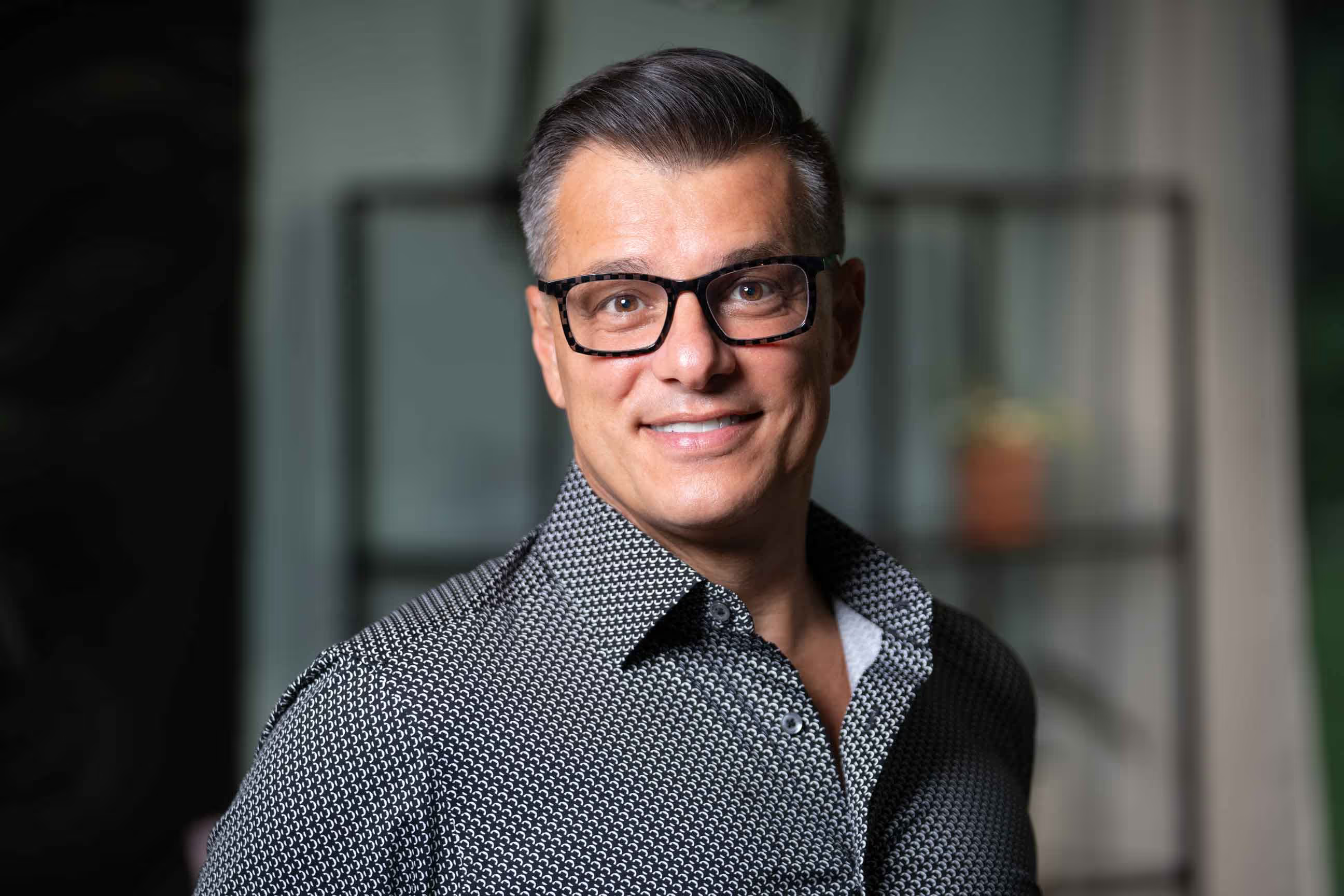
About the Creator
Dr. Frank Anderson
Dr. Frank Anderson is a Harvard-trained psychiatrist, internationally recognized trauma expert, and one of the leading voices in integrative trauma treatment. A longtime collaborator on The Body Keeps The Score, Frank brings more than 30 years of clinical experience to this course — distilling everything he's learned about how trauma actually heals into one comprehensive, accessible framework.
Training
Harvard-Trained Psychiatrist
Recognition
Internationally Recognized Expert
Experience
30+ Years Clinical Experience
What This Course Is (and Is Not)
Trauma healing is relational, nonlinear, and deeply human. This course respects that reality.
This Course Is
- A comprehensive education in how trauma actually heals
- A structured, step-by-step framework that includes neuroscience and clinical expertise
- A powerful companion to therapy
- A meaningful resource for people who lack access to therapy
- A way to understand where you are and what comes next
This Course Is Not
- A replacement for therapy
- A quick fix or self-help hack
- A single technique or modality
- A promise of “complete” or permanent healing
What's Included
10 core modules. Each builds on the last.
-
00
Why This Course Exists
The missing map: why trauma healing feels confusing, fragmented, and overwhelming — and how this course brings the pieces together.
-
01
Something Overwhelmed You
What trauma actually is (and isn't). Why it's not just about what happened, but what happened inside you when safety and connection were lost.
-
02
You Found a Way to Survive
How trauma shows up as behaviors, symptoms, and coping strategies. Why nothing about your survival was random or broken.
-
03
You Pause and Gain Clarity
Learning to slow down, track the body, and differentiate past from present. The skill that interrupts trauma loops.
-
04
Reconnecting With Strength & Wisdom
Accessing the part of you trauma could never destroy. Understanding intuition, compassion, boundaries, and calm power.
-
05
Listening to the Story Beneath the Behavior
Why behaviors are protectors — not enemies. How to understand intention, impact, and the wounds underneath.
-
06
Letting the Pain Speak
Revisiting trauma safely (not reliving it). How expression — emotional, somatic, relational — leads to integration.
-
07
Receiving What You Never Got
Corrective experiences: safety, attunement, connection. How the nervous system rewires through care.
-
08
Letting Go of the Pain
What release actually is (and isn't). How the body completes unfinished survival responses.
-
09
New Beginnings
Living from healing, not hurt. New patterns, boundaries, meaning, and purpose.
-
10
Maintenance & Relapse Prevention
Why healing is never "done" — and how to recover faster, with more compassion, when life reactivates old wounds.
How the Course Is Structured
This is not a course you watch and forget. The Path to Healing Trauma is intentionally designed as a blend of:
Teaching
Clear, expert-led education rooted in science and clinical practice.
Embodied Experience
Somatic practices that engage the body, not just the mind.
Reflection & Integration
Space to process, absorb, and make meaning of what you're learning.
Applied Neuroscience
Clinical expertise and lived experience woven into every lesson.
Because trauma doesn't heal through information alone — it heals through experience, connection, practice, and time.
Why This Course Is Uniquely Comprehensive
This is the only public-facing course that does all of the following.
Nothing here was invented. The integration is the innovation.
Start-to-Finish Map
Maps trauma healing from start to finish — a complete path, not a single technique.
Integrates All Major Approaches
Draws on all major evidence-based approaches within one coherent framework.
Explains Sequencing
Explains what comes first, what comes later, and why the order matters.
Addresses Types of Trauma
Addresses complex, attachment, preverbal, and systemic trauma — not just single-incident trauma.
Honors Science & Lived Experience
Bridges the gap between clinical research and the deeply human reality of healing.
Taught by Someone Who Shaped the Field
Created by a leading trauma expert who helped shape the field itself over three decades.
About the Cost
Here's the Reality
Typical therapy session
Multiple sessions over
many months
This course
~$150+
$1,000+
$497
Many people spend years cycling through therapy without a clear map.
For what's included — and who it comes from — it's an extraordinary value.
Lifetime Access
The Path to Healing Trauma
$497
One-time payment · Lifetime access
- A complete trauma-healing framework across 10 core modules
- Lifetime access to all modules — return to them again and again
- Education drawn from 30+ years of clinical experience
- Teaching, embodied experience, reflection, and integration
- Applied neuroscience, clinical expertise, and lived experience
*This does not replace therapy. But for many people, it provides clarity they've never had, language for what they're experiencing, direction when they feel lost, and support when therapy isn't accessible.
Who This Course Is For
This course meets people where they are — whether you're just beginning to understand trauma or looking for the next step.
The Path to Healing Trauma is not a promise of perfection. It's a map — so you're no longer walking blind.
Begin Your Journey — $497Need Help?
For support with courses, programs, or consultation groups, please contact programs@frankandersonmd.com